DeskwrenHome Office Buying Guide · 15 October 2026
Sponsored contentPaid for by Deskwren. Written in our own buying-guide format.

Reader question

What should I check before I buy a standing desk?

You have measured the corner of the room, you know roughly what you want to spend, and you are looking at a page with a photograph of a desk and eleven numbers underneath it. Which numbers actually decide whether you will still like this desk in three years?

We sell standing desks, so treat what follows as a buyer's checklist rather than a neutral test. Six things are worth checking. Each one comes with a way to check it — in a showroom if you can get to one, and in a product listing if you cannot.
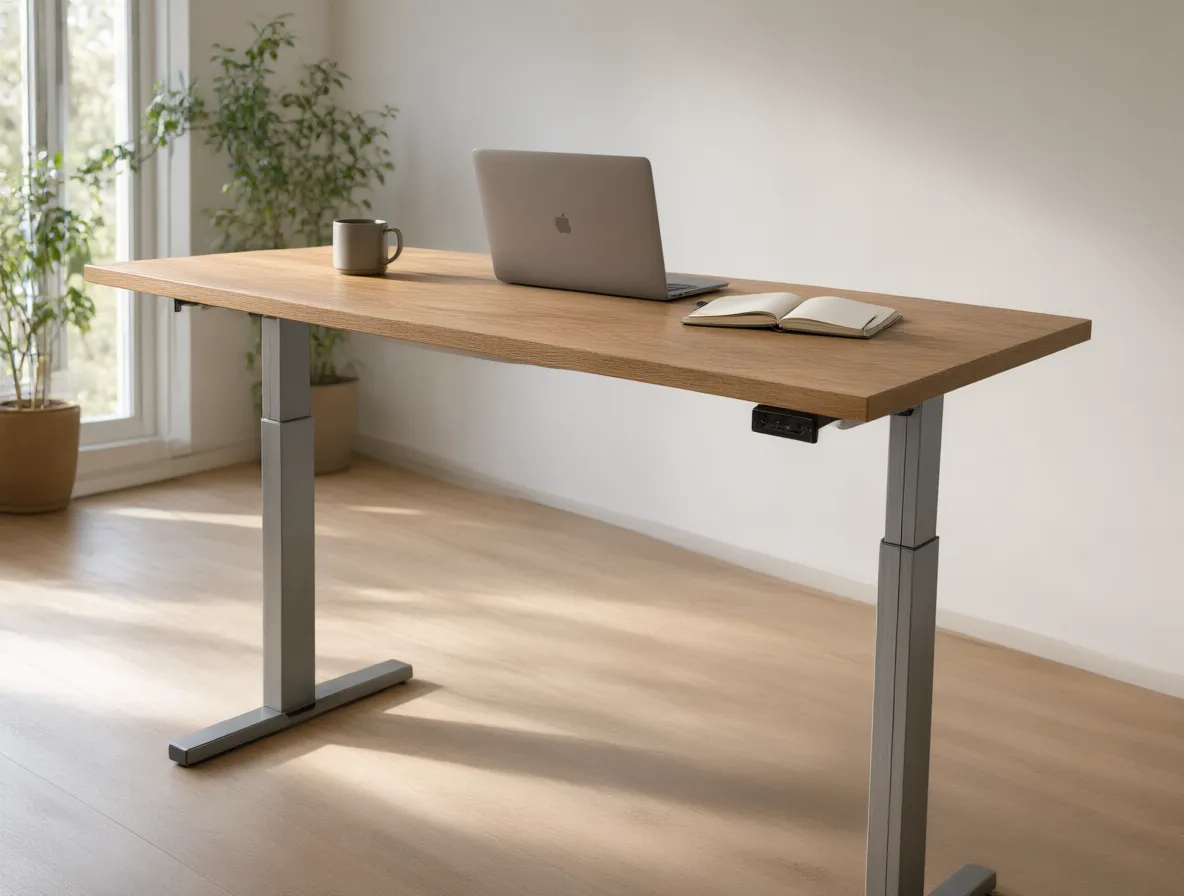
A standing desk with an oak-veneer top raised to full height in a home office

A working height is only useful if the desk is still calm at that height.
The checklist

Six things to check on any standing desk

Work down the list in order. The first two decide whether the desk suits you at all; the last four decide how long you will be happy with it.

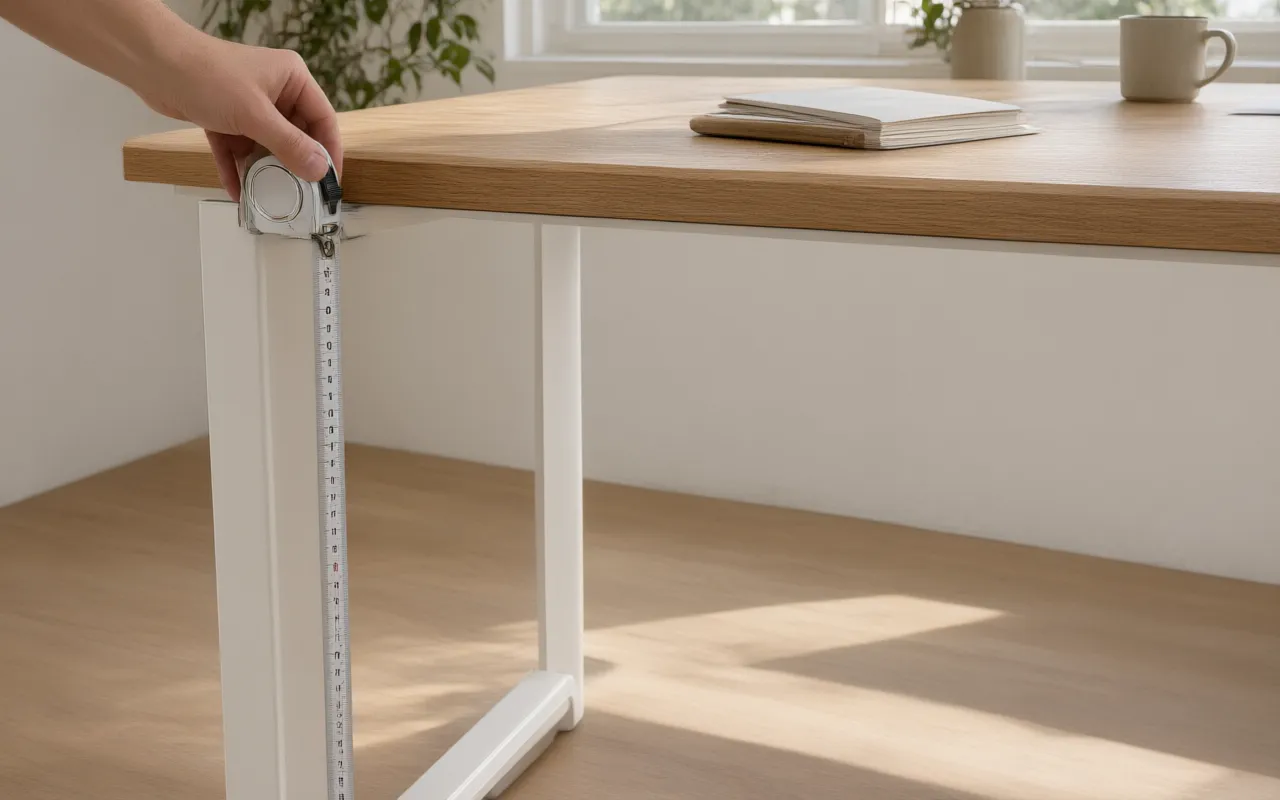
  1. A tape measure held against a desk leg, with a hand measuring the height of the top
    Check 01

    Does the height range cover both sitting and standing for your height?

    A standing desk is two desks: one you sit at and one you stand at, and the frame has to reach both. Most listings give a range from the lowest to the highest top height, so the range is where the real work is — a desk that tops out just under your standing height is a sitting desk with extra steps.

    How to check it

    Stand straight, let your arms fall, and measure from the floor to the underside of your bent elbow. That number is the top height you need. Sitting, do the same at a desk you already find comfortable. Both numbers should sit comfortably inside the range in the listing, not right at its edges.

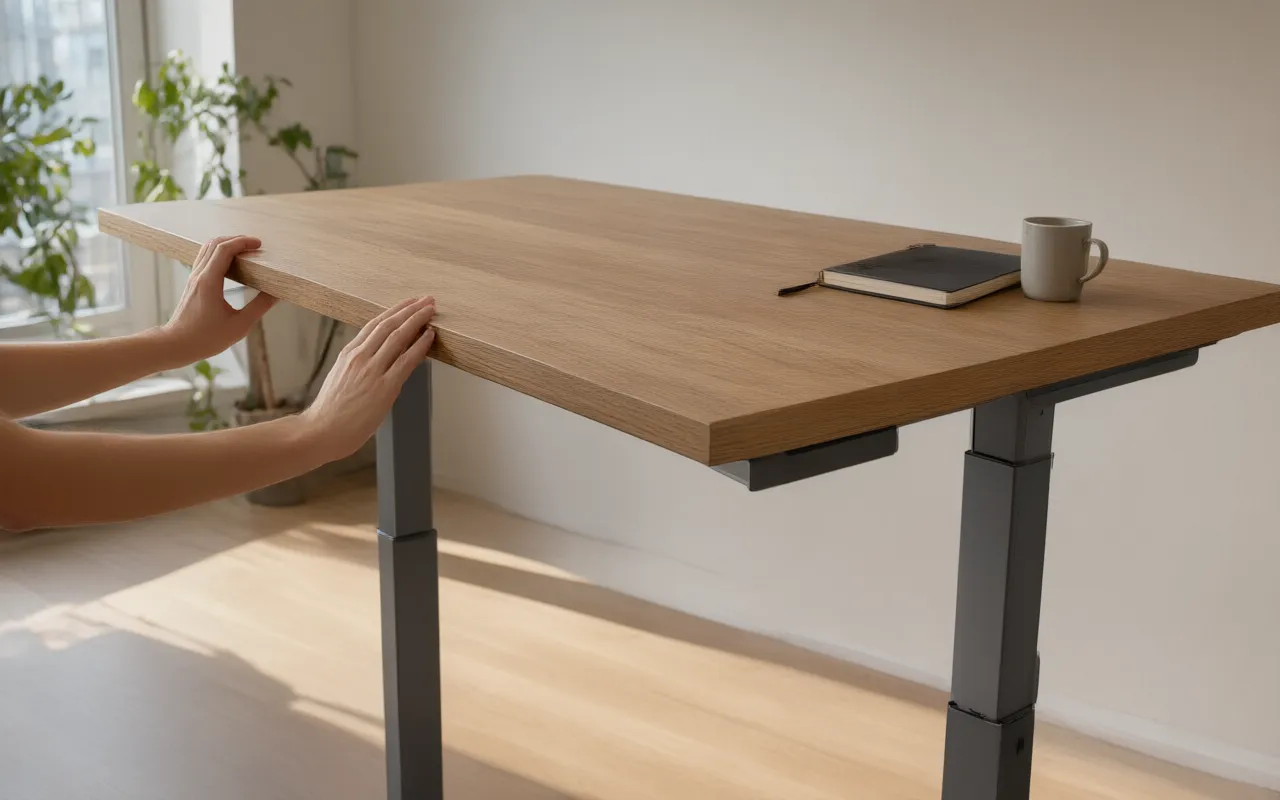
  2. Two hands pushing the front edge of a raised standing desk to test how steady it is
    Check 02

    How steady does it stay at full height?

    Every standing desk is steady low down. The test that matters happens at the top of the travel, where the frame has the most length to move and the least bracing. A desk that wobbles when you type is one you will quietly stop raising.

    How to check it

    In a showroom, raise the desk to its highest setting, rest both hands on the front edge, and push sideways and then front to back. Watch the top edge against the wall behind it. Online, look for the frame's leg profile and the number of leg stages — a two- or three-stage telescopic leg with a wider outer tube is doing more work against movement than a thin single-stage one.

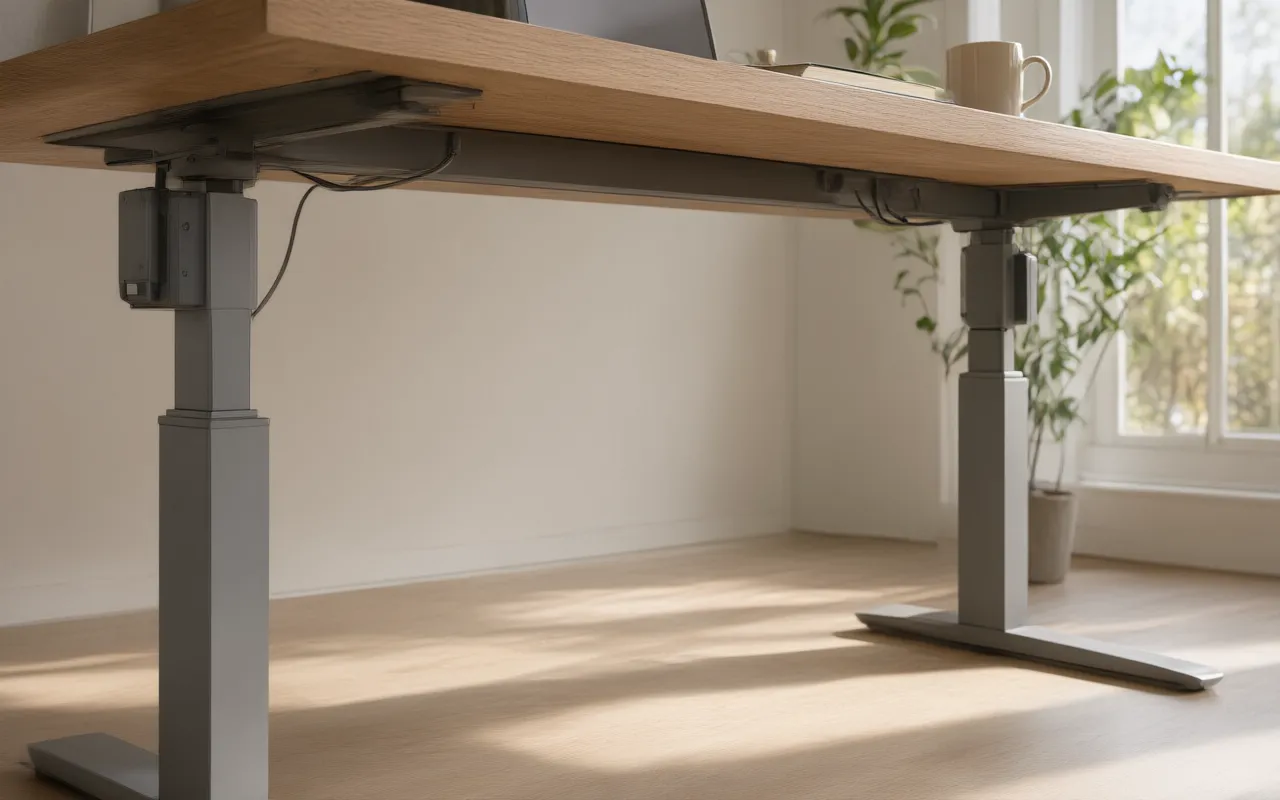
  3. Close view of two telescopic desk legs, each with its own motor housing
    Check 03

    Single motor or dual motors?

    One motor drives one side, usually through a connecting rod that turns the second leg. Two motors drive each leg directly. On a desk you raise and lower through the day, the difference shows up as evenness of travel and how hard the frame sounds like it is working.

    How to check it

    Raise and lower the desk through its full range twice and watch the two ends of the top against something level, such as a window sill or a wall line. They should stay parallel to each other all the way up. Then listen: a single motor sounds like it is pulling, a dual-motor frame sounds like a lift.

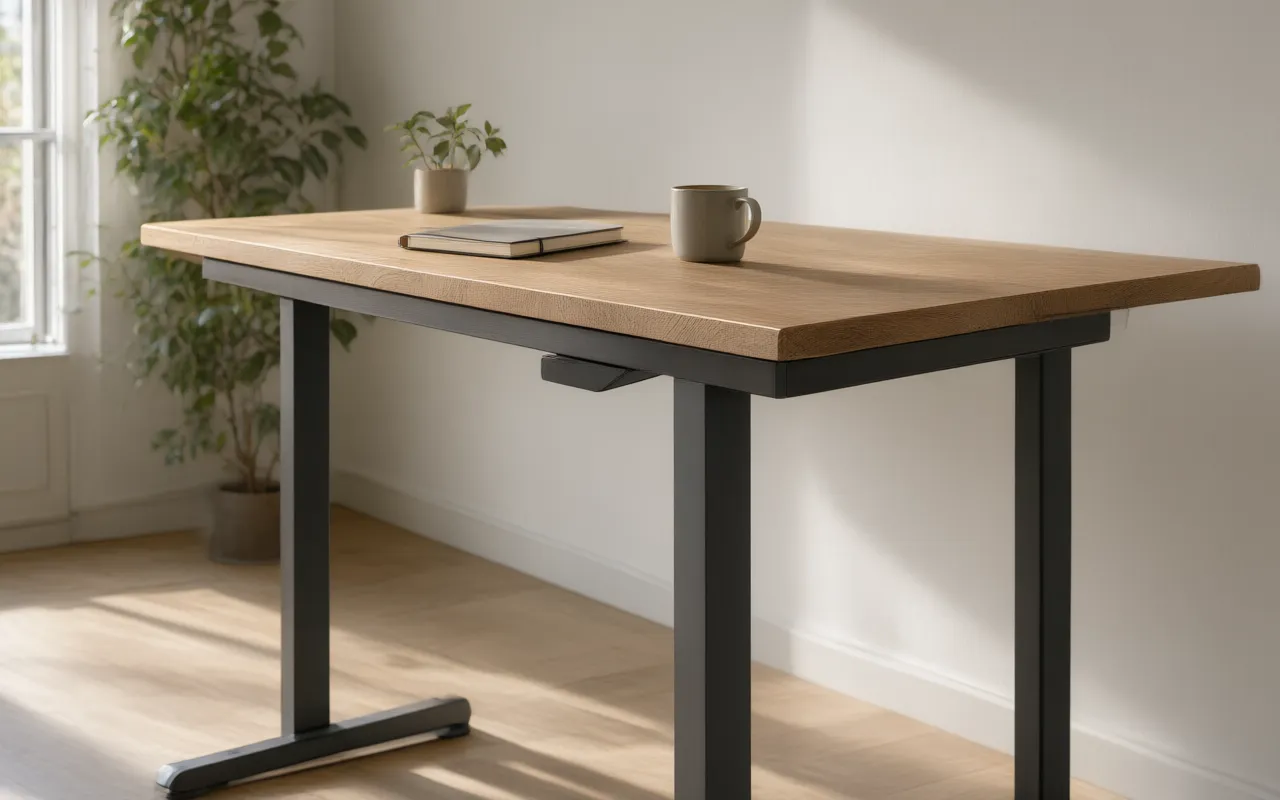
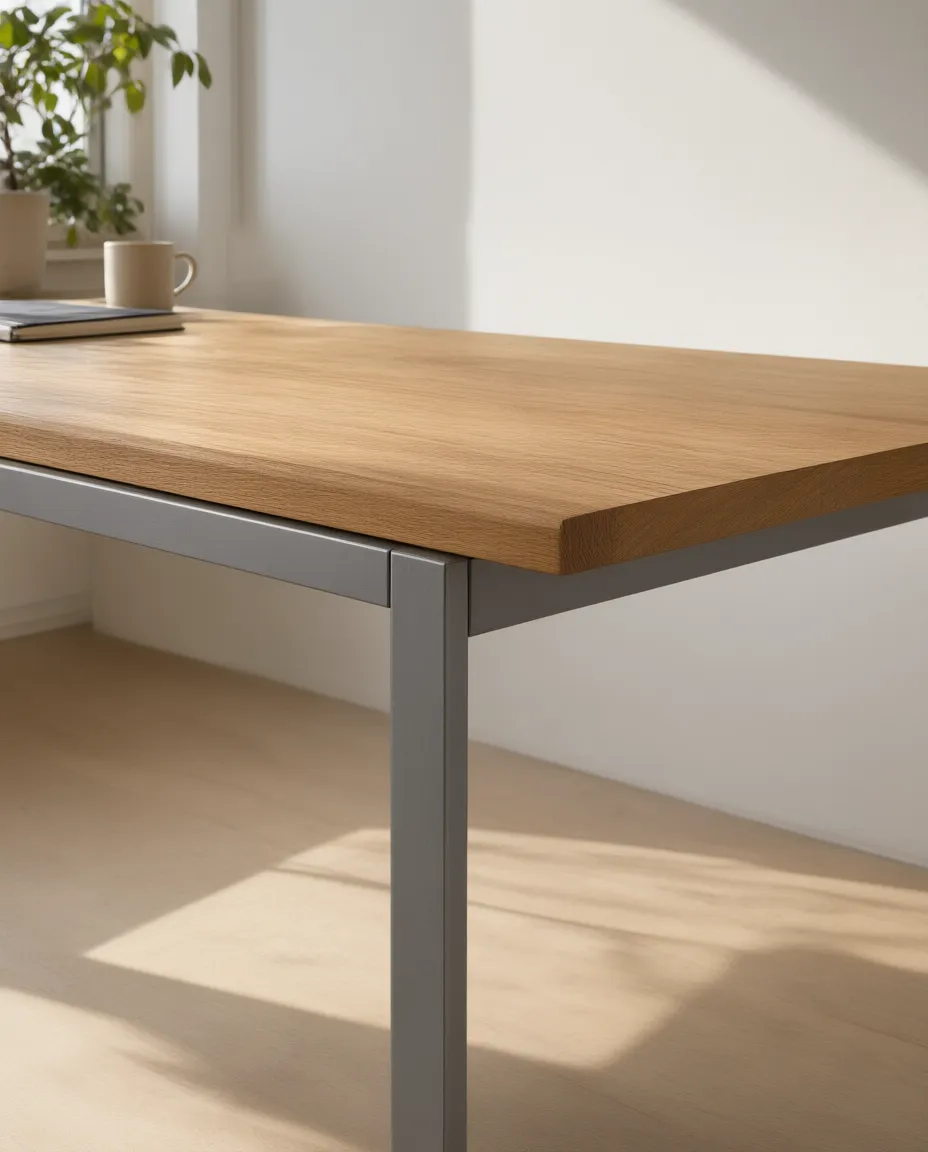
  4. An edge-on view of an oak-veneer desktop showing its side profile, with a notebook and a mug on top
    Check 04

    How much weight will it lift, and what is the top made of?

    Load capacity is really a capacity for a desk with a screen, a lamp, a mug and a plant on it — plus the weight of the top itself. Some listings quote the lifting figure for the frame alone. The top matters just as much: solid timber and solid-veneer over a stable core hold their shape far better than printed board, and they are what you touch and look at every day.

    How to check it

    Add up everything you plan to keep on the desk and leave a good margin above it. For the top, read what sits under the surface as well as on it: the words to look for are solid timber, or veneer over a stable core. In a showroom, lift an edge and look at the side profile — real veneer shows a consistent edge, printed board shows a repeating pattern.

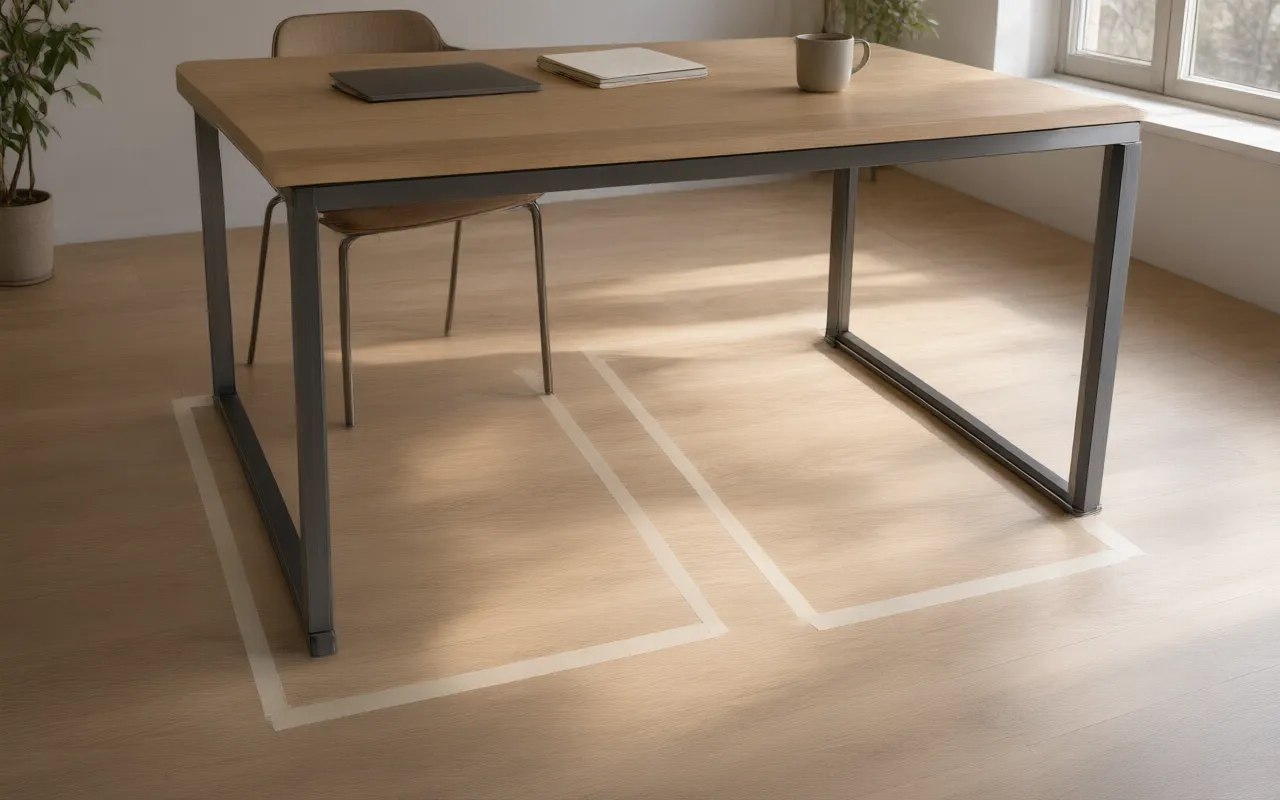
  5. Tape marking the footprint of a desk on a home office floor, seen from above
    Check 05

    Size and material of the top

    Depth decides whether the desk suits the room; width decides whether it suits the work. A monitor plus a laptop plus a notebook needs more than a monitor alone, and a top that is too deep pushes you further from the wall than you expected. Material is the other half — a matte finish keeps fingerprints and screen glare off the surface in a way that gloss does not.

    How to check it

    Mask the footprint on the floor with tape before you order, then sit at it with your usual things arranged. Pick the depth that lets you reach the back of the desk without standing up. For material, ask for a close-up of the grain rather than a styled room shot — you want to see one corner of the actual top.

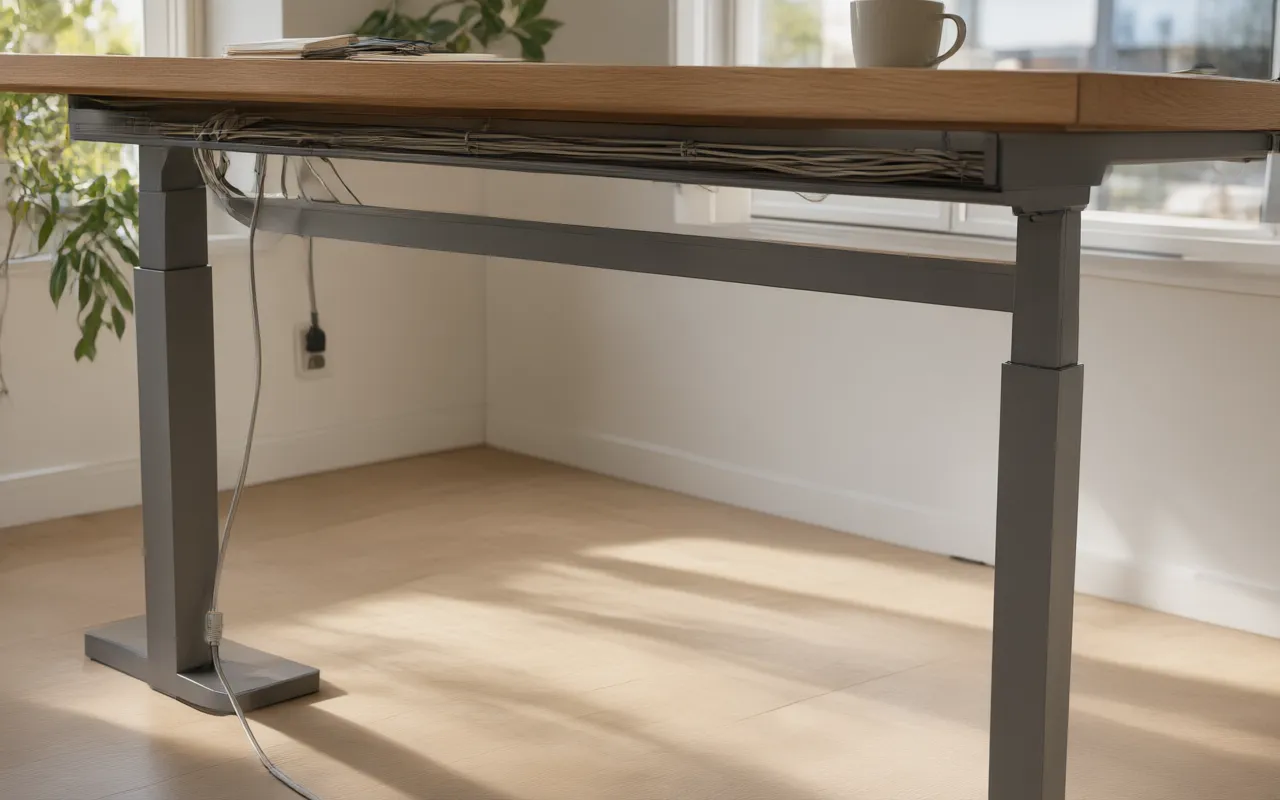
  6. Cable tray and channel running along the underside of a raised desk top
    Check 06

    Noise and cable management

    These two are the checks people skip and then live with. A desk that lifts with a loud groan makes you think twice about raising it on a call, and a desk with nowhere to put the cables leaves a bundle that travels up and down with the top and eventually gets caught on something.

    How to check it

    Raise the desk while a video call is open, or simply while someone is talking in the next room, and judge whether you would do it mid-sentence. For cables, follow the route in the product photographs: look for a tray or a channel that moves with the top, and check that the power lead is long enough to reach the floor outlet at full height.

None of the six is exotic. They are the questions a shop assistant would talk you through if the desk were standing in front of you — which is exactly why it is worth writing them down before you look at prices.

One desk, read against the list

Here is how the Deskwren Duo answers all six

We make one desk, and this is the honest version of what it is. Read it in the same order as the checklist above, and ask us the same six questions about anything else you are considering.

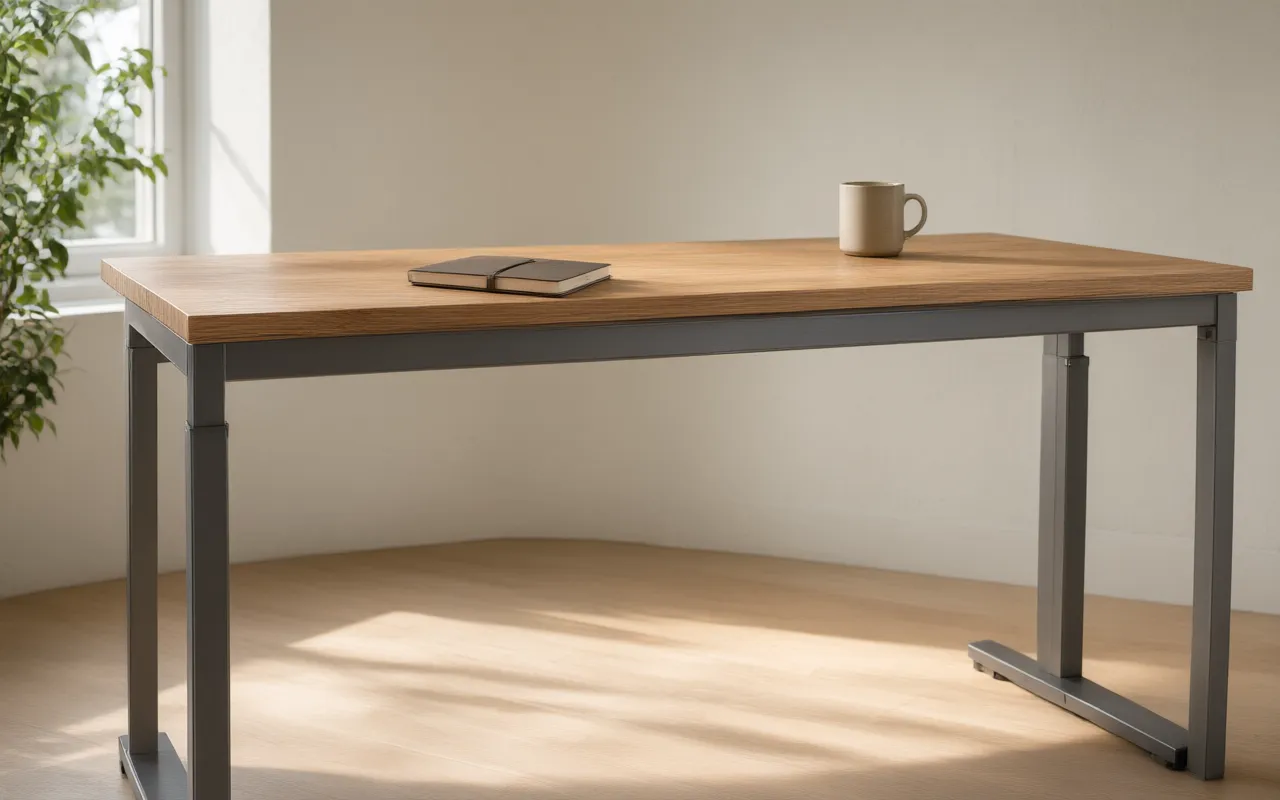
The Deskwren Duo standing desk with an oak-veneer top and steel frame in a home office

The Duo: one frame, an oak-veneer top in two sizes.

Close view of the solid oak-veneer top of the Deskwren Duo, showing the grain and its edge

Solid oak veneer, real grain, matte finish — in two sizes.

What you are buying

MotorsDual
TopSolid oak veneer
Top sizesTwo
PresetsThree

from $649

As configured. Two top sizes, one oak-veneer finish.

Configure your Duo
check_circle

30-night home trial

check_circle

Free collection if you return it

Check 01

Height range for sitting and standing

Two motors on one frame, so the top travels as a single surface from a sitting height to a standing one. Measure your own two numbers as above, then check them against the range in the configuration panel: if both sit comfortably inside it, the desk suits you.

Check 02

Steadiness at full height

The Duo is built around its two motors, and steadiness is the thing we would test first if the desk were standing in front of you. Configure it, note your standing height, and do the same hand test you would do in a showroom: push the front edge sideways and front to back at the top of the travel, and watch the top edge against the wall.

Check 03

Dual motors

One motor per side, rather than a single motor doing both. That is the version of check three that keeps the two ends of the top level as it rises, and it is the reason the Duo is a dual-motor desk.

Check 04

Load and top material

The top is a solid oak veneer — real oak, not a printed surface, so it takes a matte finish and keeps the grain of the timber. Add up what you plan to keep on the desk and compare it against the figure in the configuration panel.

Check 05

Two top sizes, one finish

The Duo comes with a solid oak-veneer top in two sizes, so the only choice that changes is footprint. Tape both outlines on the floor before you decide, then sit at the one you think you want — a desk you have to stand up to reach the back of is the wrong depth.

Check 06

Noise and cable management

Two motors doing the work of two rather than one, and three memory presets so you go to your own sitting or standing position in a single move instead of holding a button and listening to the frame hunt for it.

Take it home, then decide

The last check on any standing desk happens in your own room, at your own working heights, which is why the Duo comes with a 30-night home trial and free collection if you return it.

Next step

Configure your Duo

Two top sizes, one oak-veneer finish, dual motors underneath. Set the two choices below and the price follows.

MotorsDual
PresetsThree
Trial30 nights
ReturnsFree collection
Top size

Check 01 above: measure to the underside of your bent elbow with your arms relaxed.

Helps us talk about the footprint, not about you.

from $649

Two top sizes. 30-night home trial, free collection if you return it.